
Finding the best roofing contractor usually starts with a bad moment: a brown ceiling stain after a hard Fort Myers storm, shingles in the yard, or that sinking feeling when a small leak shows up again. In Southwest Florida, the right choice is rarely the loudest ad or the cheapest number. It is the contractor that shows proof, explains the job clearly, and fixes the problem without turning your roof into a second headache.
What “Best Roofing Contractor” Really Means in Southwest Florida
In this part of Florida, reliability matters more than polish. Heat cooks roofing materials year after year, summer storms test every seam, and hurricane season turns small weaknesses into expensive damage fast. Add insurance paperwork to the mix, and a roofing project can feel like juggling too many things at once. The best roofing contractor is the one that stays solid when the situation is messy. That means clear inspections, honest recommendations, documented estimates, and follow-through. It also means local knowledge. A roof in Cape Coral or Naples deals with sun, wind, salt air, and sudden rain in a way that contractors from outside the area may not fully respect. That matters because this is a crowded market. There are 109,000 businesses in the U.S. roofing industry, so choosing well is less about finding a unicorn and more about filtering out the risky options.Start With the Big Decision: Repair or Full Replacement?
Before comparing companies, get clear on the job itself. Plenty of homeowners start calling roofers before knowing whether the issue needs a repair or a full replacement. That uncertainty is normal.Signs a Repair May Be Enough
A repair often makes sense when the problem is limited and easy to isolate. Maybe a few shingles blew off in one area. Maybe flashing around a vent or chimney has failed. Maybe one leak started after a specific storm and the rest of the roof still looks healthy. If the damage is contained, your roof is not near the end of its life, and the decking underneath is still sound, a targeted fix can buy you time without overspending. A good contractor should say that plainly. In fact, if you are dealing with an active drip or stain, it helps to understand what to do first when water gets in before the damage spreads indoors.Signs It’s Time to Replace the Roof
Replacement becomes the smarter call when problems are stacking up. Repeated leaks in different rooms, widespread storm damage, soft spots, sagging lines, worn underlayment, or repairs that keep returning are strong clues. Patching the same roof again and again is like putting air in the same tire every week. At some point, the pattern is the answer. Southwest Florida weather speeds up wear, especially on older asphalt shingle roofs. Shingles still dominate residential homes, with nearly 69% of homeowners reporting shingles on their current roof, but metal is gaining attention because it handles heat and storm exposure well. If your roof is older and storm-beaten, replacement may be the more honest and cheaper long-term choice.Why a Trustworthy Contractor Won’t Push the Biggest Job
Here’s the thing: you can learn a lot from the first recommendation. A reliable contractor does not automatically steer you toward the highest invoice. Instead, the inspection should be careful, photo-documented, and easy to understand. You should hear where the damage is, what caused it, and why repair or replacement makes sense. That kind of explanation is a trust signal. Sales language is easy. A calm, documented recommendation is much harder to fake.The Non-Negotiables Every Reliable Roofing Contractor Should Have
Some things are not optional. You should confirm them before talking materials, colors, or price.Florida Licensing, Insurance, and Local Presence
Start with licensing and insurance. You want proper Florida licensing, current general liability coverage, and workers’ compensation coverage. If paperwork is delayed, vague, or “coming later,” that is your answer. Local presence matters too. After major storms, outside crews often flood the area, knock doors, collect deposits, and disappear when problems show up. A real local office, a working local phone number, and a visible history in Southwest Florida make a difference when warranty service or follow-up is needed months later.Experience With Storm Damage and Insurance Claims
Storm work is its own category. More than 22% of replacements come from storm-related damage, so experience here is not a nice bonus. It is part of the job in this region. A solid contractor should know how to photograph damage, document affected areas, and keep the scope organized for insurance review. That does not mean handing over control of your claim. It means you are working with somebody who understands the process and can support it. If your project involves weather damage, it helps to review how the claims process usually unfolds after a storm so nothing catches you off guard.Safety Practices and Trained Crews
Roofing is dangerous work. Contractors that talk openly about fall protection, crew training, and jobsite procedures usually run better in every other area too. Safety is not filler on a brochure. It is a sign of discipline. Training matters because crews are hard to find and keep right now. About 85% of contractors report skilled labor shortages, which makes stable, trained teams even more valuable. If a company cannot explain who will be on your roof and how the site is managed, keep moving.How to Read Reviews, References, and Reputation Without Getting Fooled
Most people look at star ratings first. That is fine, but it is not enough.What Good Reviews Actually Look Like
Useful reviews mention details. Look for comments about communication, showing up when promised, handling permits, protecting landscaping, cleaning nails, and following through after payment. “Great job” is nice, but it does not tell you much. Patterns matter more than one glowing review. Check Google, BBB, and neighborhood recommendations. Reputation still drives this industry, with 74% of homeowners finding contractors through word of mouth. That tells you something simple: people remember roofers that make life easier, and people also remember the ones that don’t.Ask for Recent Local References
Ask for a few recent jobs near you, ideally in places like Punta Gorda, Cape Coral, or Naples. Focus on projects that match your situation. If you need a storm repair, ask for storm repair references. If your home has shingles, tile, or metal, ask for that exact type of work. Recent matters more than ancient. A company may have done excellent work five years ago and changed crews, managers, or standards since then.Watch for Red Flags in Reputation
Be cautious if you see lots of vague five-star reviews posted within a short window, unresolved complaint patterns, no physical address, or a business name that seems to keep changing. Pressure tactics are another big one. If the message is “sign today or lose the deal,” slow down. That same caution applies after a storm. If you are sorting through damage, start with what to check on your roof after severe weather so you can compare contractor opinions against something concrete.Compare Estimates Like a Pro, Not Just by Price
The cheapest quote is often the most expensive mistake. That is not a slogan. It is how hidden costs show up later.What a Detailed Roofing Estimate Should Include
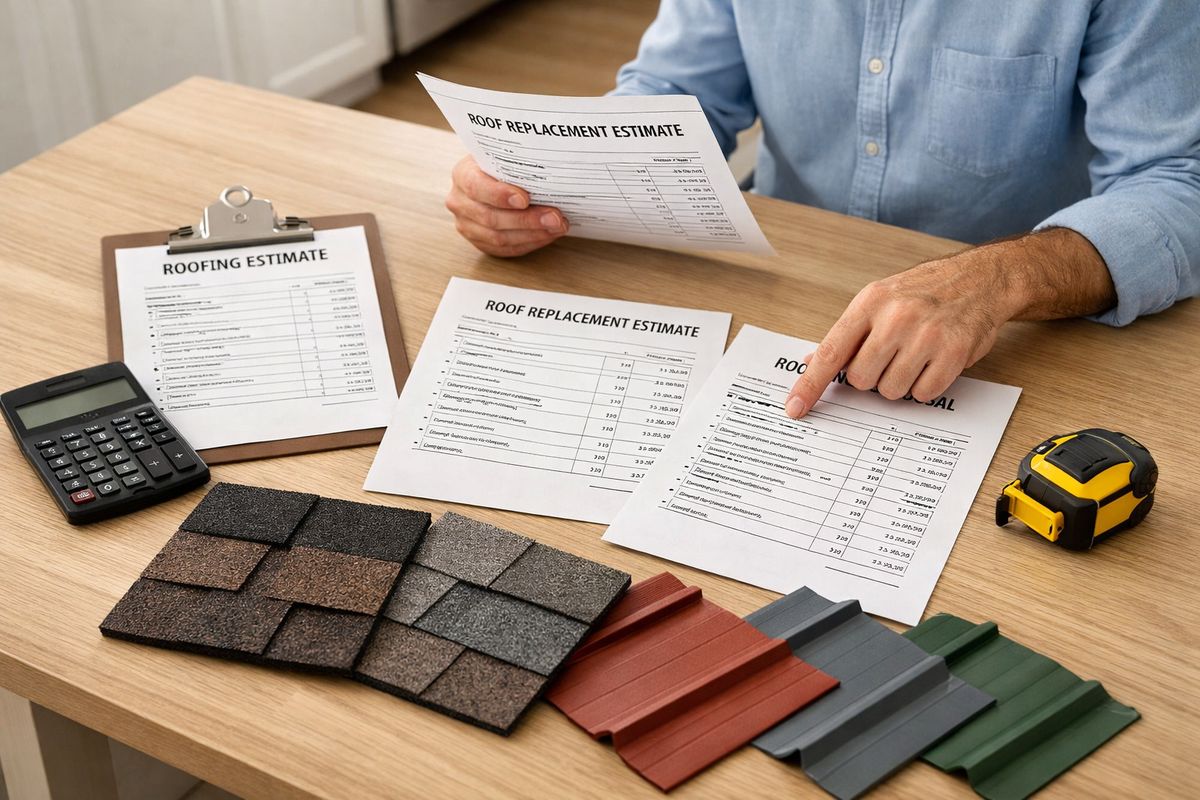
A trustworthy estimate should spell out the scope of work, which is just the exact list of what gets done. That includes tear-off, materials, underlayment, flashing, ventilation, decking repair if needed, permits, cleanup, dumpster costs, timeline, payment schedule, and warranty terms. If the estimate is thin, vague, or mostly verbal, you are not comparing apples to apples. You are guessing.Transparent Pricing vs. Suspiciously Low Bids
Transparent pricing builds trust because you can see what you are paying for. Homeowners respond to that. About 65% are more likely to contact a roofer that shows upfront pricing information. Lowball bids often leave out items that later return as change orders, rotten decking, upgraded underlayment, permit fees, or flashing work. A fair price with clear detail beats a cheap mystery every time.Questions to Ask Before You Sign
Ask who supervises the project day to day. Ask when work can realistically start. Ask what happens if damaged decking is found once the old roof comes off. Ask who pulls permits and how weather delays will be communicated. Also ask how payments are structured. Reasonable deposits are normal. Full payment upfront is not. You are not being difficult by asking for straight answers. You are buying a major exterior system for your home.