
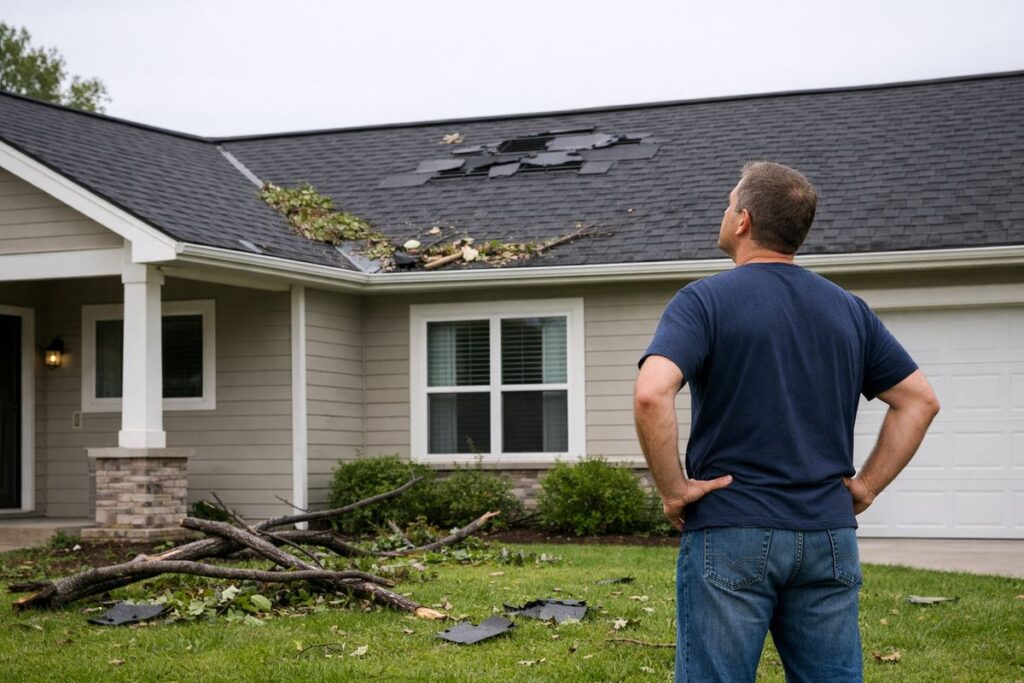
A roof damage insurance claim often starts the same way: you spot a brown ceiling stain the morning after a hard Southwest Florida storm and immediately wonder if you need a simple fix or a whole new roof. Here’s the thing: insurance usually pays for sudden storm damage, not a roof simply getting old, so the strongest claim starts with signs that clearly point to a specific weather event.
Roof damage signs that usually carry the most weight with insurance
Adjusters look for damage that feels sudden, visible, and consistent. A roof that looked fine last week but now has torn shingles, dented metal, and a fresh leak tells a much different story than a roof with years of fading and wear. That distinction is everything in a roof claim.
Missing, creased, or lifted shingles
Wind damage often leaves a pattern behind. You may notice missing tabs, shingle edges lifted up, or sharp horizontal creases where wind bent the shingle back and stressed it. Exposed underlayment also matters because it shows the roofing system was opened up, not just aged in place.
These signs carry weight because they suggest force, not time. If you can safely document from the ground, get wide shots of each roof slope, then closer photos of shingles on the lawn, exposed areas, and any obvious lifted edges. If a contractor gets on the roof, close-ups of crease lines and broken seal strips help tell the story clearly.
Hail hits, bruising, and fresh granule loss
Hail damage can be sneaky. On asphalt shingles, it often looks like dark circular marks, soft bruised spots, or sudden areas where granules have been knocked off in clusters. That fresh loss is different from the slow, even shedding that happens over years.
Hail matters because hail claims drive a huge share of weather-related property losses. In practical terms, that means adjusters know what impact damage looks like, and they also know what normal aging looks like. A sudden patchy pattern after one storm is far more persuasive than uniform wear across the whole roof.
Bent flashing, damaged vents, and dented metal
Sometimes the shingles are only part of the story. Bent flashing, cracked pipe boots, dented ridge vents, marked valley metal, bruised gutter screens, and dinged chimney caps can all support the claim. In fact, metal often shows storm impact more clearly than shingles do.
That supporting damage helps connect the dots. If your shingles show possible hail or wind damage and your soft metals show fresh impact marks too, the file becomes harder to dismiss as wear and tear.
Interior signs that line up with roof damage
A leak that appears right after a storm is powerful evidence, especially when it matches damage outside. Ceiling stains, attic drips, damp insulation, peeling paint, or bubbling drywall all matter more when the timing is tight and the roof shows fresh storm damage above that area.
If you have active moisture, pay attention to the details. A drip near the garage at 6 a.m. after an overnight storm says more than a vague memory of “some leaking recently.” If you want a clearer picture of what indoor warning signs mean, this guide to signs water has already made it inside helps you spot the problems that deserve fast attention.
The difference between storm damage and normal roof aging
This is the part that makes or breaks claims. Insurance is built around covered events, not maintenance. If the damage looks gradual, the insurer has an easy argument.
Signs insurance may call wear and tear
Curling shingles, brittle surfaces, old patch jobs failing, faded color, widespread granule loss, sagging from long-term age, and problems tied to poor ventilation usually point to an aging roof. So do issues that appear evenly across every slope with no obvious storm pattern.
The catch is that an older roof can still suffer storm damage. But if the roof already had years of decline, you need cleaner proof that something changed suddenly. Otherwise, the carrier may say the storm exposed an existing weakness instead of causing the loss.
Signs damage is tied to a specific storm
Storm damage usually looks directional and fresh. One slope may be hit harder than another. Tears look recent, not weathered. Shingle seals may break after high wind. Soft metals may show impact marks. Interior leaking may start right after a named storm or one of those violent afternoon systems that rolls through Cape Coral and is gone by dinner.
Weather evidence helps here. Wind reports, hail maps, storm dates, and even neighborhood patterns can support the timeline. Wind and hail make up about 41.5% of claims, so carriers regularly compare roof condition against local weather records when deciding what happened and when.
What to document before you file a roof damage insurance claim
Good documentation makes your claim easier to understand. Bad documentation turns it into an argument.
Photos and video that tell the full story
Take wide photos of every roof slope you can see, plus close-ups of obvious damage. Include gutters, downspouts, vents, flashing, fallen shingles, dented metal, attic moisture, and interior staining. Video helps too, especially when it shows water movement or multiple damage points in sequence.
Try to anchor the timeline with one concrete detail. A short clip of water dripping beside the water heater after last night’s storm is memorable and specific. Insurers ask for as much documentation as possible, including photos and videos, because it helps separate real storm loss from guesswork.
Storm-date proof and home records
Save weather reports, local hail or wind maps for your address, maintenance receipts, prior inspection reports, and before photos if you have them from a cleaning, sale, or recent repair. These records do one very useful job: they help show what was already there and what changed after the storm.
Even a simple phone photo from six months ago can help if it shows the roof line before the damage appeared. If you are comparing what counts as visible trouble, this rundown of common exterior warning signs is useful for matching what you see at home to what belongs in your claim file.
Temporary protection without ruining evidence
You should prevent further damage. Tarp exposed areas if needed, move valuables, catch active leaks, and keep water from spreading. But do not toss damaged materials too fast.
Broken shingles, wet insulation, damaged vents, and receipts for emergency mitigation can all support the claim later. Temporary protection is smart. Erasing the evidence is not.
Policy details that affect whether repair or replacement gets approved
Your roof condition matters, but your policy language decides what gets paid and how.
Repair, partial replacement, or full replacement
Insurers usually look at extent of damage, repairability, material availability, and code requirements. Sometimes a repair is enough. Sometimes a partial replacement works. Sometimes patching one area would leave a mismatched or functionally compromised roof, which pushes the conversation toward full replacement.
Commonly missed pieces matter here: ridge cap, drip edge, flashing, pipe boots, decking, and code upgrades. If those are left out, the scope can look smaller than the real job.
How to make your claim stronger from inspection to contractor choice
This is where a decent claim often turns into a stronger one. Not by playing games, just by being organized and getting the right eyes on the roof.
Get a professional inspection before the adjuster visit
A local roofer who understands storm patterns can help you decide if filing is even worth it before a claim gets opened. That matters because a claim record can follow your property history even when the payout is zero.
A professional inspection is also safer and more useful than guessing from the driveway. If you are sorting through options, this guide on what to verify before hiring a roofer helps you filter out the flashy promises and focus on licensing, documentation, and real local experience.
Have the roofer present during the adjuster inspection
This helps for a simple reason: fewer missed items. Your roofer can point out damaged components, explain storm patterns, and compare findings in real time. A lot of claims get supplemented later because the first scope misses pieces of the job.
Contractor presence during the adjuster meeting is widely recommended because subtle hail damage, accessory damage, and code-related items can be overlooked on the first pass.
Choose a contractor who knows insurance work without playing games
You want someone licensed, established locally, and able to explain the inspection in normal language. You also want clear photos, a written report, and someone who understands the difference between helping with documentation and making promises nobody can guarantee.
Avoid storm chasers, “free roof” pitches, pressure to sign before claim approval, or anybody hinting that your deductible can disappear. If you want a better filter for that search, start with what separates a contractor worth trusting nearby from one that shows up after every storm and vanishes just as fast.
Common mistakes that can weaken a roof damage insurance claim
Most weak claims fail for predictable reasons. Not because the damage is fake, but because the story is messy.
Waiting too long or filing with thin evidence
Delay gives the insurer room to argue. Maybe the damage worsened over time. Maybe another storm caused it. Maybe the leak came from an old repair. The longer you wait, the easier those arguments get.
Prompt reporting matters, and so do deadlines. Some policies allow about a year from the loss date, but shorter windows do exist. “I meant to deal with it later” is one of the fastest ways to turn a clean claim into a murky one.
Cleaning up too fast or throwing damaged materials away
It is natural to want the mess gone. But broken shingles, dented vents, wet drywall, and tarp invoices can all help support what happened. Save samples when practical, take photos before cleanup, and keep every receipt tied to emergency mitigation.
Taking one simple next step
Walk your home’s perimeter after the next big storm. Check for lifted shingles, dented metal, granules in the gutters, and any fresh attic moisture. If something looks new, book a professional roof inspection right away while the evidence is still easy to connect.
Frequently asked questions
How soon should you file a roof damage insurance claim?
As soon as you have documented the damage and taken basic steps to prevent more water from getting in. Fast reporting makes it easier to tie the damage to one storm and reduces arguments about delay.
Can an old roof still qualify for storm damage coverage?
Yes, if the damage is clearly tied to a covered event like wind or hail. The challenge is proving the storm caused new damage rather than exposing old wear.
Should you repair the roof before the adjuster comes out?
Only do temporary protection, like tarping or leak control, to prevent more damage. Full repairs before inspection can make it harder to show what the storm actually did.
What if the insurer says the damage is just wear and tear?
That usually means the evidence did not clearly show a sudden event. A detailed roofer inspection, storm-date proof, and better photos can make a big difference if the initial review missed the pattern.
Does interior water damage help a roof claim?
Yes, especially when the leak appeared right after a storm and lines up with exterior roof damage above it. Interior evidence is stronger when it supports, not replaces, visible roof damage.