
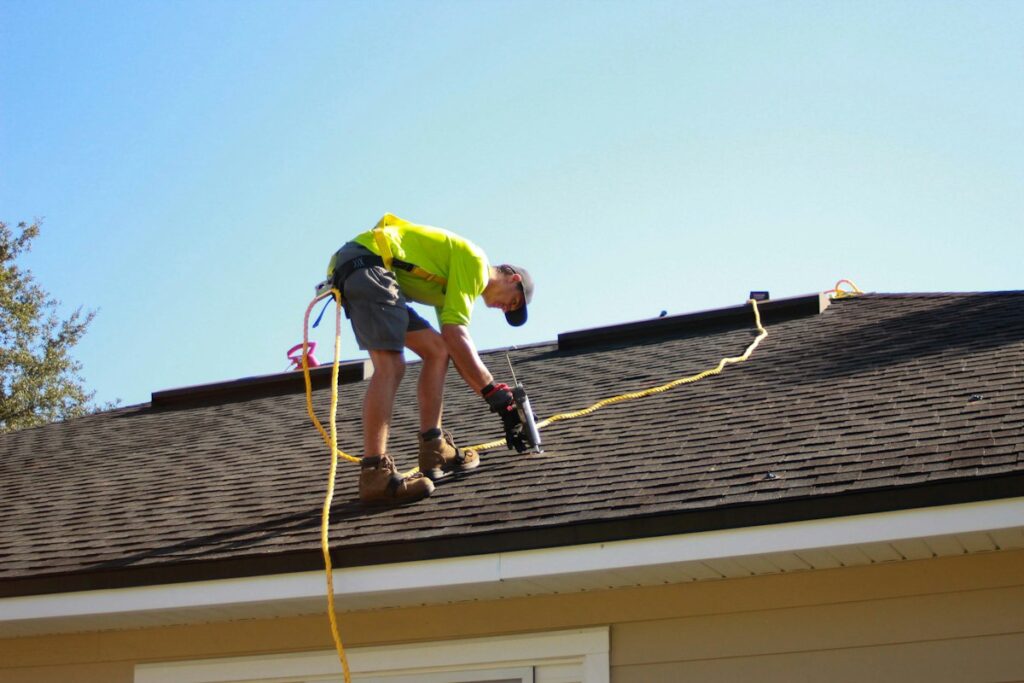
Typing “licensed roofer near me” usually happens at the worst time: after a leak, after a storm, or right when that brown ceiling stain shows up and starts spreading. In that moment, the fastest quote can look like the best quote, but licensed should be something you verify, not something you simply trust because it appears on a truck or website.
Why “licensed roofer near me” matters more than a nice-looking quote
A polished estimate does not protect your house. A proper license, matched to the right business and the right kind of work, gives you a much better shot at avoiding bad repairs, permit trouble, and insurance headaches.
Here’s the thing: roofing is one of those jobs where a mistake can stay hidden until the next hard rain. If a contractor patches the visible problem but misses damaged decking, underlayment, or flashing, your “fix” can turn into a bigger mess a month later. That matters even more in Southwest Florida, where roofs take a beating from sun, wind, and storm season.
What a licensed roofer actually means
In plain English, a licensed roofer is a contractor with legal approval to perform certain roofing work in a specific place. The catch is that licensing is not one-size-fits-all. Rules can change by state, city, county, and even by job size or scope.
That means a contractor can be legitimate in one area and not properly authorized for your project. In some parts of the country, roofing is handled at the state level. In others, local registration matters just as much. A claim of being licensed only matters when you confirm that the credential is active and covers the work on your home.
Why this matters in Southwest Florida
Southwest Florida roofs age fast. Heat bakes shingles, wind lifts edges, and afternoon storms find weak spots fast. In Fort Myers or Cape Coral, it is not unusual to notice a ceiling stain after a hard 4 p.m. rain and suddenly need answers the same day.
That urgency is exactly why vetting matters. If your roof issue started with visible storm damage, it helps to understand what roof damage can look like during a claim before anyone starts promising easy approvals or immediate replacement.
Check the license first, and make sure it matches the job
Before signing anything, verify the license status, the legal business name, and the license classification. A yard sign is not proof. A website badge is not proof. Even a certificate image in a photo gallery is not proof if it is outdated or belongs to a different entity.
Roofing rules also change more often than most homeowners realize. In Louisiana, for example, residential roofing work of $7,500 or more requires the right classification as of 2026. Different state, same lesson: the exact credential matters.
Match the business name on the quote to the official record
This is one of the easiest checks, and one of the most overlooked. The legal business name on the estimate should match the official license lookup. Not the logo. Not the nickname. Not “doing business as” language unless it lines up clearly with the registered entity.
Compare the estimate, contract, and license record side by side. If the paperwork says one name and the license search shows another, stop and sort that out before paying a deposit. Paperwork mismatches have a way of getting very inconvenient once permits, warranties, or insurance questions show up.
Confirm the license is active and local to your area
An old license number is not enough. You want current status, not a past approval that has lapsed. Save a screenshot or PDF of the public record while you are at it. That small step can help later if the start date gets pushed or if you need to recheck the file before another payment.
Local compliance matters too. Some places handle contractor licensing at the city or county level. Colorado is a good example, where city or county licensing can matter more than a statewide credential. Different region, same principle: check the exact jurisdiction tied to your permit.
Make sure the license covers roofing, not just general repair work
Not every contractor credential allows full roofing work. Some registrations cover light home improvement but not structural roofing systems or full replacements. That distinction matters if your project involves storm damage, decking repairs, or a complete reroof.
A trustworthy contractor should be able to explain the classification in plain English and show that it fits the job. If the answer is vague, move on.
Don’t Stop at the license: insurance, workers’ comp, and bonding
A license is only part of the picture. You also want the protections that kick in if something goes wrong during the job.
Ask for proof of liability insurance
Liability insurance protects you if the contractor damages your home or a neighboring property while doing the work. Ask for a current certificate and check three basic things: effective dates, coverage limits, and the exact business name.
If the policy is expired or the name does not match the contract, that is not a small paperwork issue. That is a real warning sign.
Verify workers’ compensation coverage
Roofing is risky work. If someone gets hurt on your property, workers’ compensation helps keep that injury from turning into a dispute that lands on your doorstep.
The construction labor market is tight, and 92% of construction firms report hiring challenges. That can create delays and rushed staffing, which makes it even smarter to confirm that the crew is properly covered and the company is operating aboveboard.
Ask whether a bond applies to the job
A bond is basically a financial backstop tied to compliance or performance in certain cases. Not every project uses one, and requirements vary by area, but it is worth asking what applies to your job and keeping any supporting paperwork with your contract.
Think of it like checking the spare tire before a road trip. You hope you never need it, but you still want to know it is there.
Know what You’re hiring for: repair, replacement, or insurance claim help
Before comparing contractors, get clear on what problem needs solving. A small repair, a failing older roof, and a storm-related insurance claim are three different situations, even if all of them start with a leak.
Roof repair vs. roof replacement
A good roofer should inspect the full system before recommending either option. That includes shingles or tile, underlayment, flashing, ventilation, and any signs that water has already moved inside. Repeated leaks after storms, lifted shingles, and worn underlayment are common Southwest Florida issues.
If you are still figuring out the symptoms, it helps to review the warning signs that water is already getting in. That makes estimate conversations much easier, because you can describe the problem clearly instead of just saying “it leaks sometimes.”
Storm damage and insurance claim support
If wind or hail is part of the story, look for a roofer who documents damage clearly with photos, notes, and a plain explanation of what was found. Good support is about documentation and communication, not grand promises.
No contractor gets to approve your insurance claim. Only your insurer does. Anyone guaranteeing an outcome is selling confidence that does not belong to them.
Emergency service isn’t a free pass to skip vetting
If water is actively coming in, temporary protection matters. Emergency tarping or dry-in work can help limit interior damage fast. But fast help and careful vetting can happen together.
The trick is simple: protect the house first, then verify credentials before agreeing to major repairs or full replacement. Urgency should speed up your checklist, not erase it.
Questions to ask before you hire a local roofer
A few direct questions can tell you more than a polished brochure ever will.
Ask about recent local jobs and similar roofs
Ask whether the contractor has worked on roofs like yours in nearby neighborhoods. Tile, shingle, low-slope sections, older underlayment, and storm-related repairs all come with different headaches. Local experience matters because permit habits, weather patterns, and inspection expectations can vary even within the same region.
If you want a broader framework for comparing companies, this guide to finding a contractor you feel good about hiring helps narrow the field without overthinking it.
Ask who pulls permits and who will be on-site
Permits should not be fuzzy. You want to know who is responsible for pulling them, who supervises the crew, and who your point of contact will be once the job starts.
The person doing the estimate is not always the person managing the project. That is normal. What matters is getting a clear answer instead of a shrug.
Ask for a written scope, timeline, and payment schedule
A solid estimate should spell out what gets repaired or replaced, what materials are included, whether tear-off is involved, what cleanup looks like, and what the warranty basics are. It should also explain when payments are due.
Vague one-page quotes cause problems because they leave too much room for “that wasn’t included.” Clear scope beats clever sales talk every time. For another breakdown of visible trouble spots, you can also review common signs of roof damage.
Red flags that should make you walk away
Some warning signs are subtle. Others are as obvious as a bucket under a leak.
No license lookup, stale documents, or mismatched paperwork
If a contractor cannot provide a license number, offers expired insurance certificates, or tells you not to worry about the paperwork, worry about the paperwork.
Outdated rules create real problems too. In Louisiana, for instance, current board records and current insurance requirements matter more than old PDFs floating around online. The same logic applies anywhere: use official, current records.
Big promises on insurance outcomes
A contractor can help document damage. A contractor can meet with an adjuster. A contractor cannot promise approval, payout size, or a specific decision.
Calm, clear explanations are a good sign. Overconfident guarantees are not.
How to compare local roofers without getting overwhelmed
When you have two or three estimates in front of you, ignore the temptation to judge by one big number or one friendly sales pitch. Compare credentials, scope, communication, and fit for the actual job.
Save proof before work starts
Keep copies of the license lookup, insurance certificate, signed estimate, and permit details before work begins. If the project start date slips by a few weeks, recheck the license and insurance again. Rules change, renewals expire, and businesses sometimes shift names.
That little file on your phone or laptop can save a lot of scrambling later.
A simple next step before you book anyone
Before your next call or deposit, do one thing: look up the roofer’s license and match it to the exact name on the estimate. It takes a few minutes, and it can save you from the kind of mistake that only shows up once the rain comes back.
Frequently asked questions
How do you verify a roofer’s license?
Use the official state, county, or city lookup tied to your area. Check that the license is active, the business name matches the estimate, and the classification fits roofing work.
Is a business license the same as a roofing license?
No. A general business registration only shows that a company exists in some form. Roofing authorization is separate and should specifically allow the kind of work being quoted.
Should you hire a roofer for emergency tarping before checking credentials?
You can get temporary protection in place quickly, but you should still verify credentials before agreeing to larger repairs or full replacement. Emergency service should not turn into blind trust.
What documents should a roofer provide before work starts?
Ask for the license information, proof of liability insurance, proof of workers’ compensation, the written scope of work, and permit details if permits are required.
Can a roofer guarantee your insurance claim will be approved?
No. A roofer can document damage and explain findings, but the final coverage decision belongs to your insurer.
What matters most when comparing two nearby roofers?
Start with license status, matching paperwork, insurance, and scope clarity. After that, look at communication, local experience, and how clearly each contractor explains your repair versus replacement options.