
A roof problem stops being “small” the second water gets a path into your house. If you’re looking up urgent roof repair after spotting a brown ceiling stain or hearing a drip after a hard Southwest Florida storm, you’re already dealing with something that can snowball fast.
Urgent roof repair means damage that needs quick attention because waiting can lead to leaks, mold, rotten wood, damaged insulation, or even structural trouble. In a place where heavy rain and wind can roll through in one afternoon, that timeline gets short.
When a roof problem stops being “minor”
A tiny stain on the ceiling can feel easy to ignore, especially if it dries up by morning. The catch is, roofs rarely fail in a neat, obvious way. Water can travel along decking, rafters, or insulation before it shows up in your living room, so the spot you see is often not the spot where the problem started.
Here’s what you’ll learn in this guide:
- What counts as urgent
- Which warning signs matter most
- What to check after storms
- What to do first
- When repair makes sense
- When replacement makes more sense
- How to choose a roofer fast
What counts as an urgent roof repair
Routine wear is one thing. A roof that’s a little older, has some cosmetic aging, or needs a scheduled inspection usually isn’t a same-day emergency. Urgent roof repair starts when your home is exposed to water or when the roof system looks unstable.
That includes active leaks, missing shingles after a storm, lifted edges, exposed underlayment, damaged flashing, sagging sections, fallen branches, or anything that leaves part of the roof open. If water is getting in, or can get in with the next storm, it’s urgent.
Why waiting usually costs more
Roof problems never get cheaper by sitting there. That’s the rule.
A repair that might cost about $1,173 on average can turn into drywall replacement, mold cleanup, insulation removal, and decking repairs if you wait. In some pricing guides, a modest leak repair can become a several-thousand-dollar mess within months. If you want a clearer sense of the numbers behind fixing an active leak and what the process usually looks like, it helps to compare repair costs before damage spreads.
The biggest urgent roof repair signs you shouldn’t ignore
You do not need to climb onto your roof to spot trouble. Honestly, you shouldn’t. Most urgent warning signs show up from the ground, inside the house, or in the attic.
Ceiling stains, drips, and attic moisture
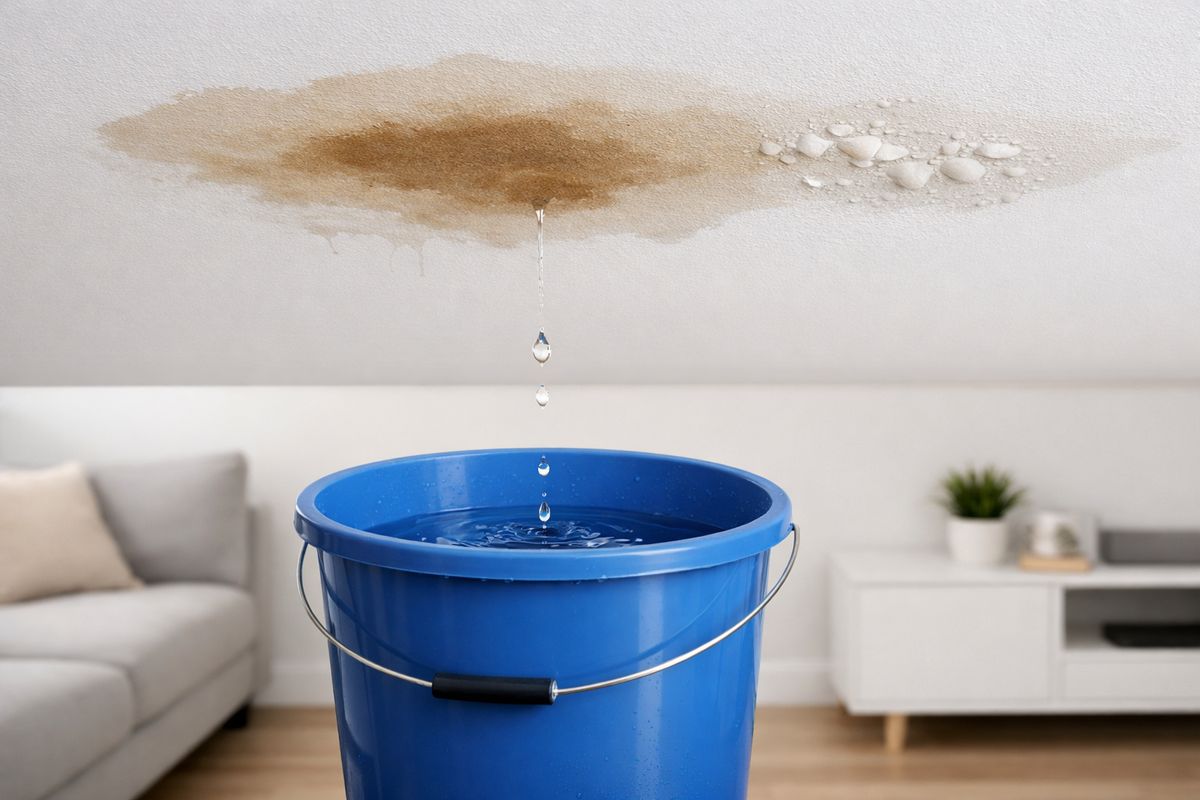
Brown rings on the ceiling, bubbling paint, damp drywall, musty smells, wet insulation, or visible dripping all count as major red flags. Once water shows up inside, it has already made it through the outer roofing material and into the system below.
The tricky part is that the leak entry point may be several feet away from the stain. Water likes to travel. So even a small spot near a hallway vent can point to roof damage higher up the slope.
Missing shingles, lifted edges, or bare patches
Cracked, curled, loose, or missing shingles matter because the top protective layer is gone or compromised. Once that happens, Florida rain and wind can work underneath the surrounding shingles fast.
A few missing shingles on a younger roof may still be a repair job, not a replacement. But don’t confuse “repairable” with “safe to ignore.” Even a few missing shingles are time-sensitive once storms keep coming through.
Granules in gutters and around downspouts
Granules are the gritty, sand-like coating on asphalt shingles. They help shield the shingle from sun and weather. When you start seeing a lot of that grit in the gutters or near downspouts, the shingles are losing protection.
In Florida heat, that matters even more. Heavy granule loss usually means the shingles are aging out and becoming easier to crack, dry out, or tear in the next storm.
Sagging roof lines or soft spots
This is one of the most serious signs on the list. A sagging section can point to trapped moisture, rotted roof decking, or deeper structural weakening underneath.
If a roofline looks dipped, wavy, or uneven when it used to look straight, treat it as a call-now situation. Sagging repairs often cost far more than minor fixes because the problem is usually below the surface.
Damaged flashing around vents, skylights, and chimneys
Flashing is the thin metal that seals openings and transitions in the roof. Around vents, skylights, chimneys, and wall connections, it’s often the first place leaks start.
Cracks, rust, separation, lifted edges, or bent pieces can let water in long before you notice a major stain indoors. These are the kinds of small roof issues that can turn into bigger repairs if nobody deals with them early.
Storm damage that looks small but Isn’t
Southwest Florida roofs take a beating from sun, humidity, downpours, and wind-driven rain. After a storm, a roof can look mostly fine from the driveway and still have damage that needs quick repair.
What to check after wind-driven rain
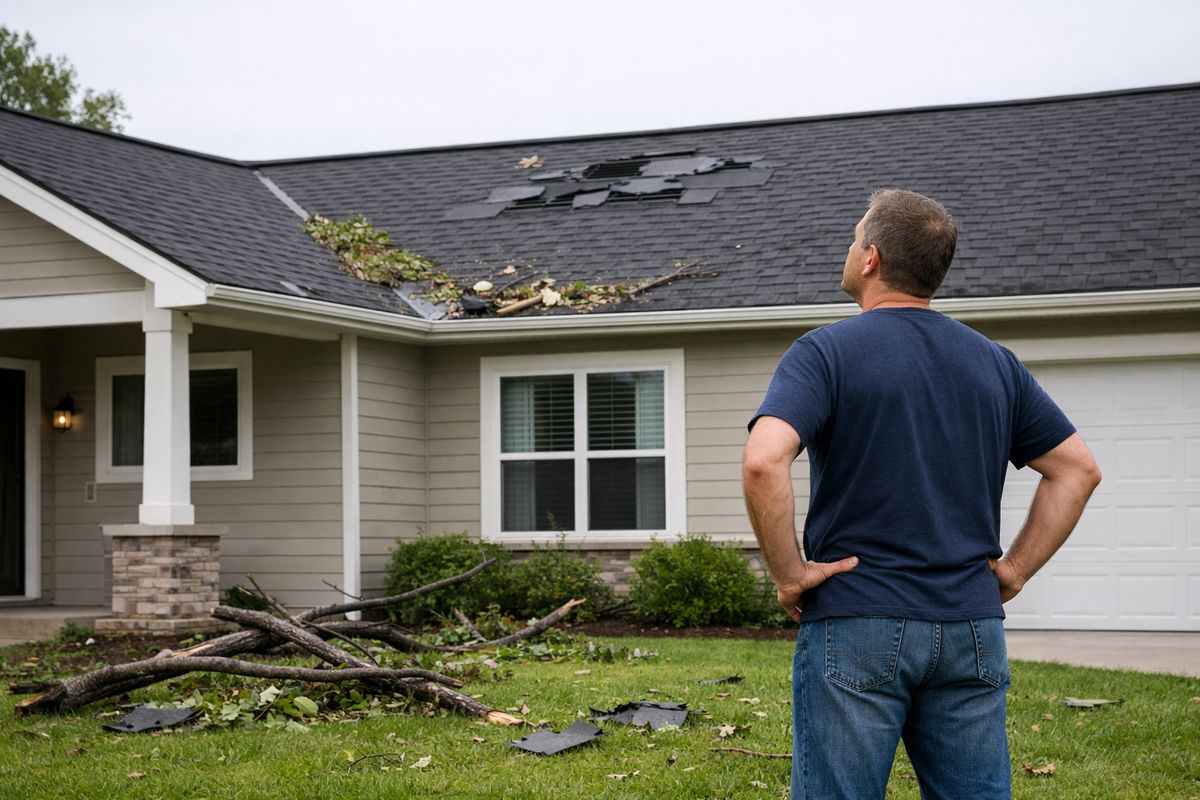
The morning after a summer storm rolls through Fort Myers, do a slow walk around the house from the ground. Look for missing tabs, loose shingles, bent metal edges, branches on the roof, clogged valleys, and debris piled in low spots.
Then check inside. If the attic is safe to enter, look for damp wood, dark spots, wet insulation, or daylight where there shouldn’t be any. Storm damage is often hard to spot from the ground, especially when the visible damage is small but the water path underneath is not.
Hidden damage from debris impact
A branch strike is obvious. Smaller flying debris is sneakier. It can crack a tile, dent metal, puncture shingles, or bruise the material enough to shorten its life without leaving a dramatic hole.
That impact can also weaken the decking underneath. So if something hit the roof during a storm, don’t assume the only damage is the mark you can see.
When storm damage points to repair vs. replacement
If the damage is isolated and the roof is still fairly young, repair usually makes more sense. That’s especially true when the affected area is limited and the cost stays well below a full replacement.
If the roof is older, has widespread storm hits, or already had ongoing issues before the storm, replacement may be the smarter conversation. For a deeper look at the warning signs after rough weather that deserve real attention, focus on spread, age, and repeat trouble, not just what looks ugly from the curb.
What you should do first when you notice these signs
Panic doesn’t help. A simple plan does.
Start inside and protect your home
Start by moving furniture, rugs, electronics, and anything else that could be damaged by drips. Put down buckets or towels where needed, and make note of exactly where stains, moisture, or bubbling paint are showing up.
If the attic is safe and dry enough to enter, check carefully. Look for wet insulation, damp wood, moldy smells, or beams of daylight. No climbing on the roof, no balancing on ladders in the rain. Keep it boring and safe.
Document everything for repairs and insurance
Take clear photos of the stain, leak, attic moisture, fallen branches, and any roofing material you find on the ground. Write down the date of the storm or the first day you noticed the issue.
If shingles, tiles, or flashing pieces fell into the yard, save them if you can do it safely. Sudden storm damage is often covered by insurance, while age-related wear usually is not. Good photos make that conversation much easier.
Know when to call for emergency service the same day
Call right away if you have active leaking, exposed decking, major shingle loss, sagging areas, a tree impact, or water getting near electrical fixtures. Those are same-day issues, not next-week issues.
Temporary tarping can buy time, but that’s all it does. It’s a short-term patch so the problem doesn’t get worse before the actual repair happens.
Repair or replacement? how to make the call
This is the part most homeowners actually care about. Can it be fixed, or are you looking at a full replacement?
When repair is usually the smarter move
Repair usually makes sense when the damage is isolated, the roof is still relatively young, and the rest of the system is in decent shape. A limited flashing issue, a small leak, or a few missing shingles often fit this category.
As a rough rule, repair tends to make more sense when the damaged area is limited and the cost is nowhere near replacement pricing. That’s even more true if the roof still has plenty of life left. If you’re unsure about age, it helps to know how roofing lifespan tends to play out in Southwest Florida.
When replacement starts making more sense
If your roof is around 20 years old or older, leaking in multiple places, sagging, or needing the same fix again and again, replacement starts to look a lot less painful than constant patching.
That’s especially true because replacement costs far more than repair, so it only makes sense when the roof is broadly failing. Once repair quotes start approaching a big chunk of replacement cost, patching stops being the bargain it seems.
How roof material changes the decision
Material matters. Asphalt shingles are the most common and often the simplest to repair. Tile can be durable but tricky, especially if matching older tiles is hard. Metal roofs often last longer, but repairs can cost more and need a contractor who knows the system. Flat roofs have their own leak patterns, usually around seams, drains, or penetrations.
That means the same visible problem can lead to a different recommendation depending on what your roof is made of and how easy it is to repair correctly.
How to choose a roofer fast without getting burned
Urgent roofing problems are exactly when bad contractors show up. Stress makes it easier to get pushed into the wrong job.
Questions to ask before saying yes
Ask if the contractor is licensed and insured. Ask how long the company has worked in Southwest Florida, how quickly somebody can inspect the roof, whether the estimate will be in writing, what the warranty covers, and whether repair is genuinely on the table or if every visit turns into a replacement pitch.
Also ask how the leak source will be confirmed. Anybody worth hiring should care about finding the actual failure point, not just patching the stain.
Red flags during urgent roof repair quotes
Watch out for pressure tactics, vague pricing, cash-only demands, or promises that sound too clean and easy. Be careful with anybody who pushes full replacement before checking the attic, flashing, gutters, and roof penetrations.
Another bad sign is skipping documentation. If there’s no written scope, no proof of insurance, and no clear explanation of what failed, slow down.
One smart next step today
After the next storm, do one safe ground-level walkaround and a careful attic check. If you spot stains, granules, missing shingles, sagging, or moisture, book an inspection right away. That one habit can save you a lot of money and a lot of drywall.
Frequently asked questions
Is a roof leak always an emergency?
Not every leak means the roof is collapsing, but an active leak is always urgent. Once water is inside, damage keeps spreading to insulation, drywall, wood, and sometimes wiring.
Can you wait a few weeks to fix missing shingles?
If there’s no active leak and the damage is truly limited, it may not be a same-day emergency. But in Southwest Florida, waiting through more rain and wind is a gamble, so scheduling repair quickly is the smart move.
How much does urgent roof repair usually cost?
Nationally, average roof repair runs around $1,173, though the range can be much lower or higher depending on damage and material. Emergency service usually adds extra cost, especially after hours or during storm periods.
Does homeowners insurance cover urgent roof repair?
Insurance often covers sudden storm damage, fallen trees, or other accidental events. It usually does not cover old age, neglect, or wear and tear.
Should you climb on the roof to inspect damage?
No. Check from the ground and inside the attic if it’s safe. Roof surfaces can be slick, weak, or unstable after storms, and a professional inspection is the better move.