
You notice a brown ceiling stain after one of those hard, sideways summer storms in Fort Myers, and suddenly the question gets real: how long does a roof last down here, actually? The short version is simple. In Southwest Florida, roof life depends more on material, sun, salt, storms, installation, and upkeep than whatever number showed up on the sales sheet years ago.
A roof’s lifespan is the number of years the whole roofing system can keep water out and hold up safely before repairs stop making financial sense. That “system” includes the visible roof covering, flashing, fasteners, underlayment, and ventilation, which is why two roofs built in the same year can age in completely different ways.
How long a roof really lasts in Southwest Florida
If you live in Naples, Cape Coral, Punta Gorda, or Fort Myers, national roof lifespan charts can be weirdly misleading. A shingle roof in a mild inland state may age slowly and evenly. A roof in Southwest Florida gets baked, soaked, salt-dusted, and wind-tested for months at a time.
Here’s the thing: roof age matters, but not by itself. A 16-year-old architectural shingle roof that was installed right, ventilated well, and inspected regularly can still have useful life left. A 10-year-old roof with bad flashing, poor attic airflow, and storm damage can already be in trouble.
This guide covers what different roof types usually last here, why local conditions shave years off those estimates, how to tell when a roof is close to done, and where the repair versus replacement line usually falls.
What you’ll learn in this guide:
- Realistic local lifespan ranges
- Why Southwest Florida roofs age faster
- Warning signs you can spot from the ground
- When repairs still make sense
- When replacement is the smarter call
- How insurance changes the decision
- Which roof materials give the best value
- How to vet a local roofing contractor
The short answer: average roof life by material
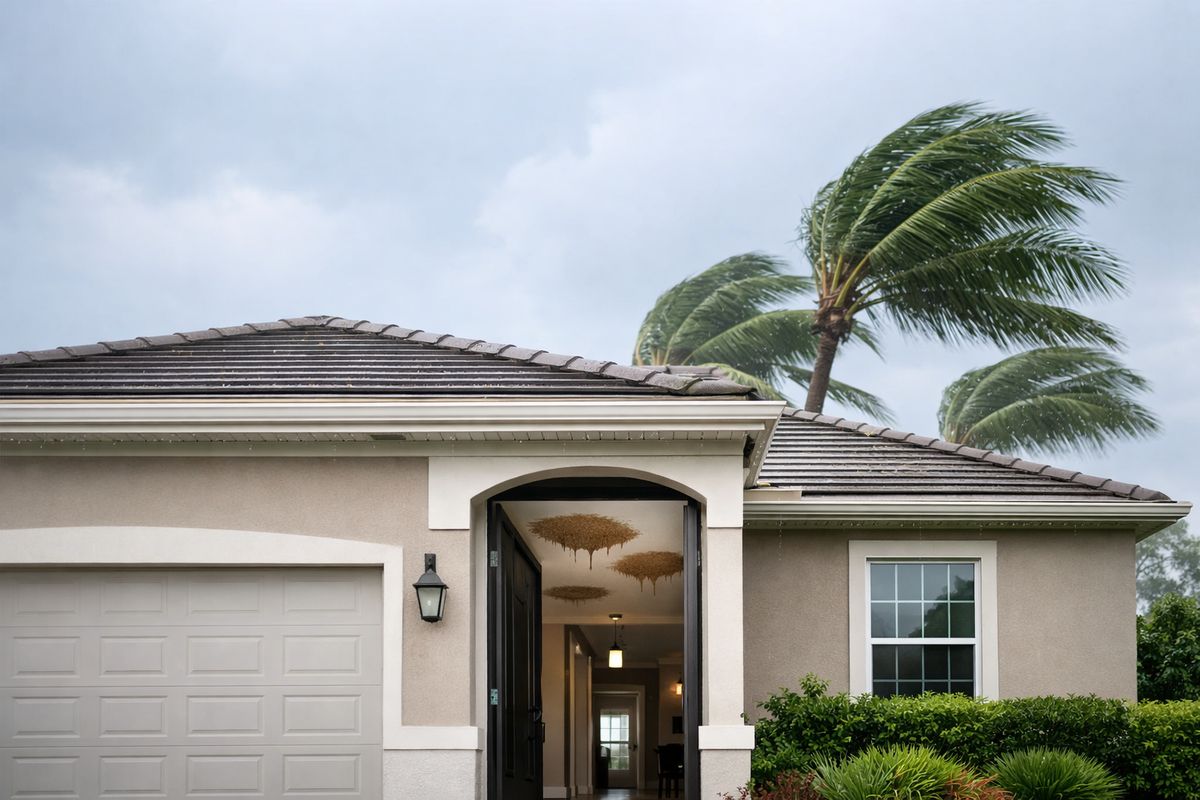
If you just want the headline numbers, start here. In Florida, a typical roof lasts about 15 to 25 years for asphalt shingles, 40 to 70 years for metal, 50 years or more for tile itself, and 10 to 20 years for many flat-roof systems. Southwest Florida usually pushes those ranges toward the lower end, especially near the Gulf.
Asphalt shingle roofs
Asphalt shingles are the most common lower-cost option, and usually the shortest-lived common roof type in this climate. Older 3-tab shingles often last around 10 to 20 years in Florida, sometimes less near the coast. Architectural shingles usually land around 18 to 25 years inland, with coastal homes often seeing something closer to 18 to 22.
That’s the realistic range, not the box-store fantasy version.
Metal roofs
Metal is usually the longest-lasting practical option in Southwest Florida. Standing-seam systems, the kind with concealed fasteners, often last 50 to 70 years inland and somewhat less in harsher coastal exposure. Exposed-fastener metal roofs usually don’t make it as long, often landing more in the 25 to 45 year range because screws and washers become the weak spot.
Tile roofs
Tile is a little tricky because the tile itself can last a very long time, often 50 to 100 years or more. But the underlayment below it, the waterproof layer doing the quiet work, often wears out in 20 to 30 years. So when a tile roof gets “replaced,” the real issue is often underlayment, not the tile on top.
Flat and low-slope roofs
For TPO, EPDM, modified bitumen, and similar systems on garages, additions, lanais, or low-slope sections, a realistic Florida range is usually 10 to 20 years. Some TPO systems can do better with strong installation and good drainage, but standing water and debris can shorten that fast.
Why roofs wear out faster in Southwest Florida
A roof in Chicago and a roof in Cape Coral do not live the same life. Southwest Florida cuts years off roof systems because the climate keeps applying pressure from different angles at once.
Sun, heat, and UV exposure
Sun is the steady grinder. Day after day, UV rays dry out roofing materials, fade protective coatings, and make shingles lose oils that help them stay flexible. That’s why asphalt tends to get brittle faster here, and why south- and west-facing slopes often look rougher first.
Some Florida roofers estimate local sun and humidity can shorten lifespan by 20% to 30% compared with the same material in more average conditions. That tracks with what homeowners usually see. A brochure might promise one thing, but August in Southwest Florida has other plans.
Humidity, rain, and moisture
Heat alone would be enough, but then the wet season shows up. Long stretches of humidity, daily storms, and slow-drying roof surfaces can wear materials down, feed algae growth, and expose small weak points faster.
Moisture is especially rough on places where water lingers, such as valleys, flashing transitions, and low-slope sections. If water gets under a lifted shingle or cracked tile, damage can build quietly for months before a ceiling stain finally tips you off.
Salt air near the gulf
If your home sits close to the Gulf, salt air changes the equation. Metal panels, flashing, fasteners, sealants, and exposed hardware usually age faster near the coast, especially within about a half-mile to a mile of the water.
That doesn’t mean metal is a bad choice. It means material selection matters more. In coastal spots, corrosion-resistant coatings and, in some cases, aluminum systems make a lot more sense than cheaper steel options.
Hurricanes, wind, and storm debris
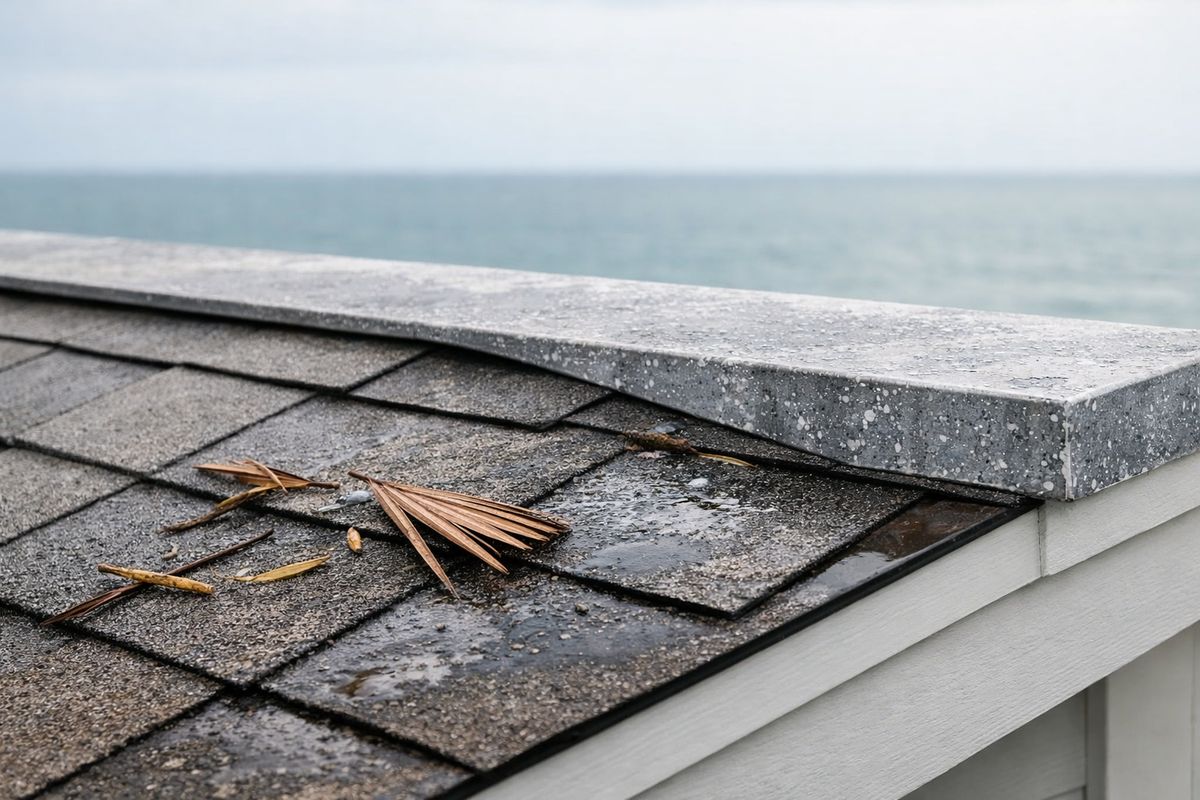
A roof doesn’t need to blow off to lose years of life. One major storm can lift shingles just enough to break the seal, loosen flashing, dent panels, crack tiles, or bruise areas that start leaking later. That delayed damage is the catch.
Some Florida estimates suggest a direct Category 2 or stronger hurricane can cut 3 to 7 years off a shingle roof’s remaining life, even if it doesn’t fail right away. If a storm rolled through and your roof suddenly looks “mostly fine,” that’s exactly when hidden damage gets missed.
What matters more than age alone
Using age as the only decision-maker is like buying a used truck based only on the model year. You’d want to know mileage, maintenance, accident history, and how it was treated. Roofs work the same way.
Installation quality
A badly installed roof ages fast. Incorrect nailing, weak flashing details, cheap sealants, sloppy valleys, poor edge securement, or shortcuts with underlayment can knock years off a system before you ever notice a leak.
This is one reason the same shingle product can last 20 years on one house and struggle by year 12 on another. Material matters, sure. Installation matters just as much.
Attic ventilation
Ventilation sounds boring until you realize it can add years to a roof. In plain English, attic ventilation helps hot, trapped air escape while letting cooler air in through intake vents, usually at the soffits. The usual best setup is ridge vents paired with soffit intake.
Good airflow lowers attic temperatures and reduces moisture buildup. Poor ventilation can shave years off shingle life, with some Florida estimates putting the loss at 3 to 5 years or more. If your attic feels like an oven in July, your shingles are paying for it.
Roof design and drainage
Simple roofs usually age more gracefully than complicated ones. Every valley, transition, dormer, low spot, and wall intersection creates another place for water to slow down or sneak in.
Low-slope areas are even fussier. If drainage is poor and water ponds after heavy rain, membranes break down faster and leak risk climbs. Sometimes the problem isn’t the roof covering at all. It’s the way water moves across the roof.
Florida code and approved systems
Florida code matters because local weather is not forgiving. The 8th Edition Florida Building Code, effective December 31, 2023, added stricter underlayment and fastener requirements for many systems. Florida Product Approved materials also matter for wind resistance, durability, and insurance documentation.
If a contractor can’t clearly explain what approval numbers, underlayment layers, and fastening pattern are being used, slow down.
Lifespan by roof type: what you can expect locally
Here’s where the broad ranges get more useful. If you’re comparing roof types or sizing up your current one, this is the section worth bookmarking.
3-Tab Asphalt shingles
3-tab shingles are the old budget standby, and honestly, they struggle the most here. In Southwest Florida, 10 to 15 years near the coast and maybe up to 18 or so inland is a fair expectation if installation and ventilation were solid.
Common failure signs include curling edges, missing tabs, brittle cracking, granule loss in gutters, and repeated wind damage. Once these roofs age, repairs become a game of whack-a-mole. One patch gets fixed, another weak spot pops up after the next storm.
Architectural shingles
Architectural shingles are thicker, stronger, and usually a better fit than 3-tab for local conditions. A realistic local lifespan is usually around 18 to 25 years, sometimes a bit less close to salt exposure and a bit more inland with good ventilation.
For many homes, architectural shingles are still a decent value. The upfront cost stays manageable, the look is familiar, and repairs are usually straightforward while the roof is still in its middle years. But no, you should not expect the optimistic northern-state lifespan numbers you sometimes see online.
Standing-seam metal
Standing-seam metal is usually the best long-term durability play in Southwest Florida. Full stop. The concealed fasteners help reduce the common leak points that show up on exposed-fastener systems, and quality finishes hold up better against UV, salt, and rain.
Realistic lifespan is often 40 to 70 years, with the higher end more common inland and the lower end more likely near the coast unless the system is built specifically for that exposure. The upfront price is higher, but the long life, lower maintenance, and strong storm performance change the math over time.
Exposed-fastener metal
Exposed-fastener metal can still be a solid option, but it’s not the same thing as standing seam. The visible screws and rubber washers take weather directly, and over time those components loosen, dry out, or need replacement.
That’s why lifespan is shorter, often around 25 to 45 years depending on location and maintenance. If you’re looking at one of these systems, ask more questions about screw pattern, panel thickness, coating, and future maintenance expectations.
Concrete and clay tile
Tile roofs have staying power, but the visible tile can fool you. Concrete and clay tile can last decades, and clay in particular can go a very long time. But the system below the tile is what usually decides when major work happens.
A lot of tile roofs in Florida look fine from the street while the underlayment below is already aging out. That’s why a tile underlayment issue can drive replacement decisions long before the tiles themselves are done.
Flat roofing membranes
Flat and low-slope membranes on additions or lanais usually live shorter lives than steep-slope metal or tile. TPO often performs better than older low-slope materials in Florida heat, but drainage is everything. If water sits, seams, penetrations, and flashing details become the pressure points.
A realistic expectation is often 10 to 20 years, with the lower end showing up when debris, ponding, and infrequent inspections are part of the story.
Signs your roof is nearing the end
You don’t need to climb on your roof to know something’s off. In fact, don’t. Plenty of warning signs show up from the yard, driveway, attic, or living room.
Exterior warning signs
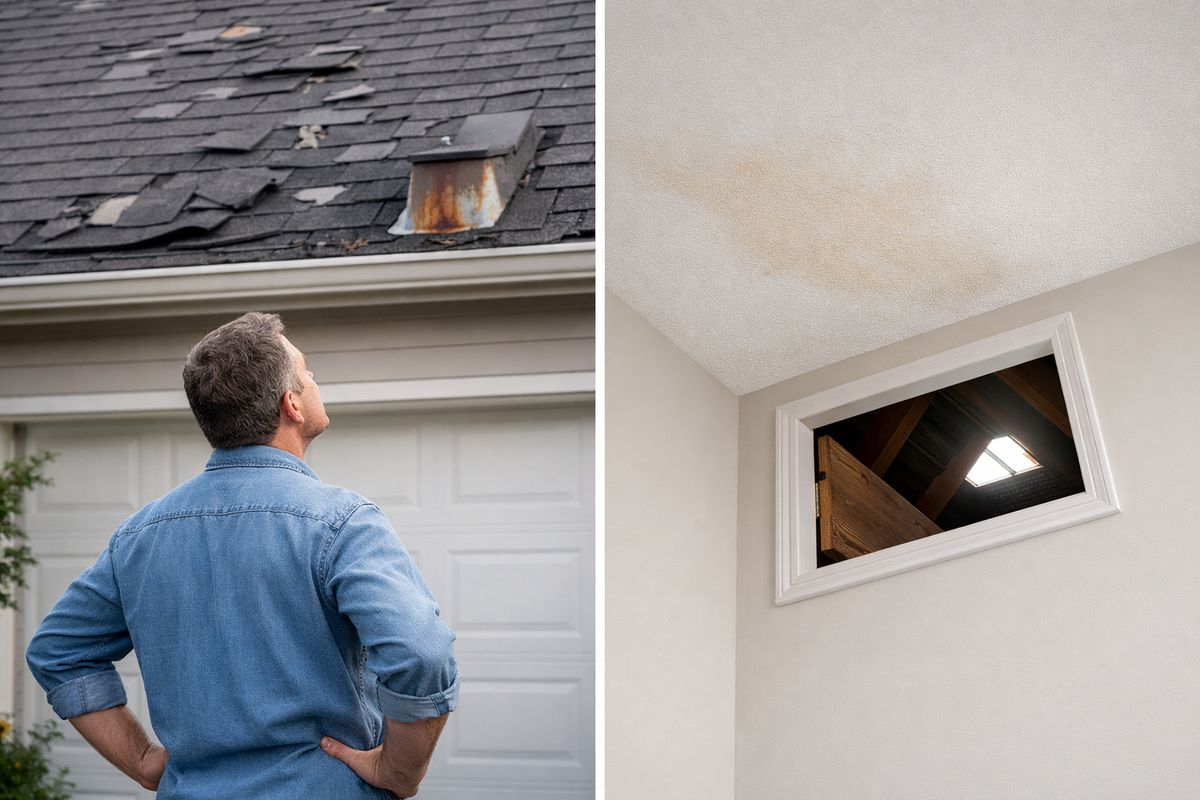
Start outside with the obvious stuff: curled shingles, bald patches where granules are gone, missing tabs, cracked or slipped tiles, rusting panels, exposed fasteners, bent flashing, sagging areas, and dark stains.
Storm damage deserves extra attention. Wind can crease shingles, shift ridge pieces, and break seals you can’t see from ground level. If you’re not sure what damage crosses the line from cosmetic to real, this breakdown of roof trouble after a storm helps sort out what actually needs repair.
Interior warning signs
Inside the house, roof problems often show up as ceiling stains, peeling paint near exterior walls, attic moisture, mildew smells, wet insulation, or tiny shafts of daylight in the attic. Repeated leaks after heavy rain are a loud warning, even if the stain seems small.
A small leak is rarely just a small leak for long. It acts more like that tiny drip under the sink you ignore for a month, then suddenly the cabinet floor is soft.
Age plus damage: when the clock really runs out
Age by itself doesn’t end a roof. Age plus damage does. If your roof is older and now has several small issues at once, a replacement conversation usually makes more sense than another patch.
That’s especially true when leaks keep returning, repairs are happening in multiple areas, or storm damage stacked on top of existing wear. At that point, pouring money into spot fixes often just buys a little time at a bad price.
Repair or replace? Here’s the line
This decision feels complicated until you strip it down. If the problem is isolated and the roof still has good life left, repair it. If the roof is old, worn in several areas, and asking for attention every season, replacement is usually the better spend.
When a repair usually makes sense
Repairs usually make sense when the damage is limited: one flashing issue, one leak source, a handful of lifted shingles, a small section of storm damage, or a newer roof with one trouble spot.
This is also the time to move quickly. Something as simple as a loose flashing edge can turn into soaked decking if you wait through another storm cycle. If you’re seeing early warning signs, this guide to small roof issues that get expensive fast is worth a quick read.
When replacement is the better move
Replacement usually wins when wear is widespread, leaks are repeated, storm damage hit multiple slopes, or the roof is already near the end of its realistic local lifespan. The same goes for roofs that have become hard to insure because of age or visible condition.
If water is already getting in, understanding the usual cost and repair process for a leaking roof can help, but older roofs with recurring leaks are often past the point where repairs make financial sense.
Why tile roofs are a special case
Tile changes the conversation because “replacement” doesn’t always mean throwing out the tile. If the tiles are still in good shape, major work may involve lifting and reusing them while replacing the underlayment below.
That can preserve the look of the home and avoid replacing perfectly usable tile. But it still counts as major roof work, and it needs to be done carefully.
How insurance can affect the decision
Insurance is part of the roof conversation in Southwest Florida whether anyone likes it or not. Roof age, visible wear, storm history, and documentation can all affect claims, renewals, inspections, and underwriting questions.
What insurance often looks at
Insurance carriers often focus on roof age, storm damage, active leaks, visible deterioration, maintenance history, and whether the system appears code-compliant and properly installed. A newer roof can help, but condition matters too.
An older roof with no obvious issues may still raise underwriting questions. A younger roof with visible damage definitely will.
What to do after storm damage
After a storm, take clear photos from the ground and inside the house, document any leaks or stains, and do what you safely can to prevent more water intrusion. Then get a professional inspection quickly.
Don’t wait for a stain to spread three feet across the ceiling before acting. Storm damage that looks minor on day one can become a much bigger insurance and repair problem later.
Why inspection reports matter
A good inspection report gives you photos, condition notes, problem areas, and a clear repair or replacement recommendation. That helps with claims, but it also helps you compare contractors without guessing.
It’s also one of the best ways to separate real issues from sales pressure. A roof inspection should show you what’s wrong, where it’s wrong, and why it matters.
How to make your roof last longer
You can’t stop Florida weather, but you can absolutely help your roof age better. Maintenance doesn’t make a weak roof immortal, but it does keep small issues from turning into early failure.
Schedule inspections twice a year
Twice-yearly inspections are a smart baseline here, plus a post-storm check after any major weather event. Many Florida roofers recommend one inspection before hurricane season and one after the roughest weather has passed.
An inspector should be looking at shingles or panels, flashing, sealants, penetrations, valleys, drainage, exposed fasteners, tile movement, and any signs of storm impact or moisture intrusion.
Keep gutters, valleys, and roof surfaces clear
Leaves, palm debris, and grime trap moisture and slow drainage. Valleys clogged with debris hold water exactly where you don’t want it. Gutters backing up can push water under edges and into fascia or soffit areas.
This is simple stuff, but it matters. Roofs last longer when water leaves quickly.
Fix small problems fast
A lifted shingle, cracked tile, loose flashing edge, or tiny leak is rarely stable. Heat, rain, and wind keep working the problem until it spreads. Delaying a small repair is one of the easiest ways to shorten roof life.
Improve ventilation if needed
If the attic feels hot and stale, or shingles seem to be aging faster than expected, have the ventilation checked. Ridge vents with soffit intake usually give the best continuous airflow on many homes, and better ventilation can mean slower shingle aging and less moisture trouble.
If You’re replacing your roof, which material gives you the best value?
Best value doesn’t mean cheapest invoice. It means what you spend compared with how long the roof lasts, how much maintenance it needs, and how well it holds up in this climate.
Best budget option
For most homeowners, architectural shingles are still the common lower-cost choice. They usually look better and last longer than 3-tab shingles, and the upfront price stays easier to manage than metal or tile.
The tradeoff is lifespan. In Southwest Florida, you’re usually looking at something like the high teens to low twenties, not a forever roof.
Best long-term option
Standing-seam metal is usually the best long-run value in this region, especially for storm exposure and coastal homes. It lasts longer, generally handles wind better, and avoids some of the maintenance weak spots found in shingles and exposed-fastener metal.
Yes, it costs more upfront. But if you plan to stay in the home and want the strongest durability play, this is usually the answer.
Best fit for tile homes
If your house already has tile, keeping the tile look often makes sense. If the tiles are still serviceable, replacing the underlayment and resetting the tile may give you the best balance of appearance and cost.
A full system change may still be worth discussing if the tile is damaged, the structure needs updates, or maintenance has become a headache. But for many tile homes, the smartest move is fixing the waterproof layer below while keeping the visible roof style.
How to choose a trustworthy southwest Florida roofing contractor
A good roof can be ruined by a bad contractor. A fair contractor should be able to explain the system clearly, document the condition honestly, and show exactly what you’re paying for.
Ask about Florida product approval and code compliance
Ask what Florida Product Approved materials are being used, what underlayment system is included, and how the roof will meet current code. If the answer is vague or full of sales fluff, keep looking.
You want a roof built for Florida requirements, not just described as “premium.”
Get specific about materials and scope
Ask for details in writing: underlayment type, fasteners, flashing replacement, ventilation components, edge metal, tile reset details if applicable, and warranty terms. A vague estimate is a problem.
Specific scope protects you from surprise change orders and cut corners.
Look for storm-damage and insurance experience
In Southwest Florida, local storm experience matters. A contractor who understands hurricane damage, inspection photos, documentation, and insurance timelines can make the process a lot smoother.
That experience also helps with spotting hidden storm damage that a generic out-of-town crew might miss.
Watch for red flags
Be careful with pressure tactics, cash-only deals, suspiciously low bids, refusal to show license or insurance information, and recommendations that don’t match the actual roof condition. If a contractor jumps straight to full replacement without documenting why, that’s a bad sign.
Common questions about roof lifespan in Southwest Florida
How long does an asphalt shingle roof last in Florida?
A realistic Florida range is usually about 15 to 25 years, with 3-tab shingles often landing lower and architectural shingles lasting longer. In Southwest Florida, sun, humidity, and storms usually push those numbers toward the low or middle end.
How long does a metal roof last near the coast?
Near the coast, a quality metal roof can still last decades, often around 35 to 60 years for coastal standing seam and less for exposed-fastener systems. Corrosion-resistant materials and coatings matter a lot more once salt air enters the picture.
How long does a tile roof last if the tiles still look good?
The tiles may still be fine, but the underlayment beneath them may not be. That hidden waterproof layer often needs replacement in roughly 20 to 30 years, even when the tile on top still looks solid.
Does a new roof help with homeowners insurance?
Often yes, or at least it can help with insurability and underwriting questions. A newer, code-compliant roof in good condition is generally easier for insurers to get comfortable with than an older roof showing wear.
What’s The best time of year to replace a roof in Southwest Florida?
The best time is before your roof forces the decision. Planning outside peak storm chaos can help with scheduling, but condition matters more than chasing a perfect month. If your roof is leaking or storm-damaged, sooner is better.
A simple next step if your roof is getting older
If your roof is getting up there in age, leaked during the last storm, or just doesn’t look right anymore, book a local inspection now instead of waiting for the next downpour to answer the question for you. Clear photos, an honest condition report, and a straight repair-versus-replacement opinion can save you from turning a manageable roof issue into a much more expensive mess.